
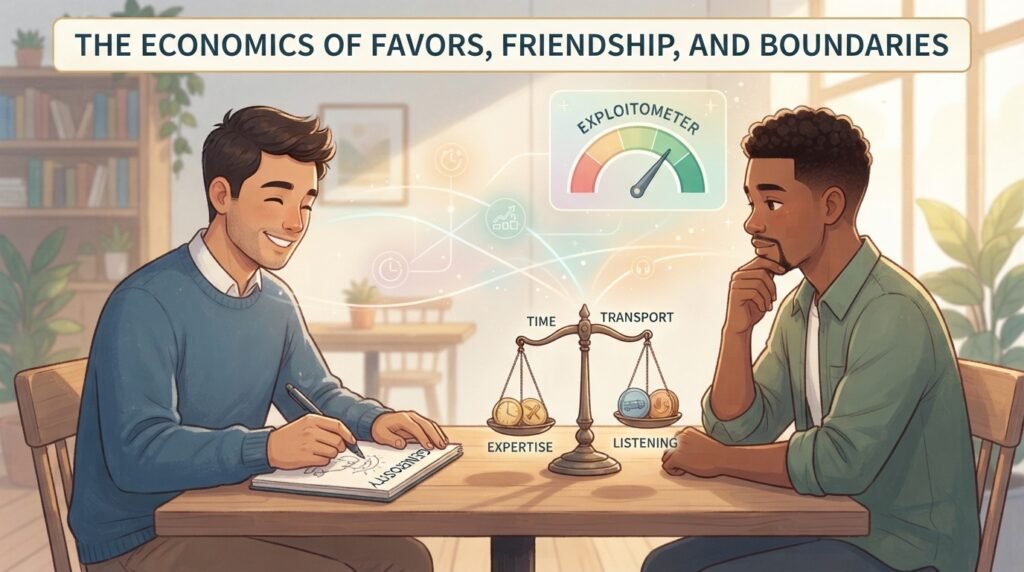

Friendship should involve generosity, but generosity should remain voluntary. Being someone’s friend does not mean their time, expertise, money, transportation, or effort are automatically free.
A useful principle is:
Don’t keep giving today simply because you hope someone might help you someday.
If you genuinely want to help, help. If the request consumes significant time or expertise, it’s also reasonable to charge, especially when you’re providing professional skills. And sometimes the healthiest response is simply no.
Reciprocity doesn’t have to be perfectly equal. One friend might fix computers while another provides transportation or helps with something else. What matters is mutual consideration, not keeping an exact ledger.
Everyone should have an internal “exploitometer”: notice when someone repeatedly receives significant value while contributing little, or when you’re saying yes because you’re afraid to say no.
Money can sometimes create a healthy boundary. If someone wants professional expertise, saying “I can do that for X” makes the value explicit. But don’t charge someone as punishment for not giving you something else; charge because the service itself has value.
And remember:
Continued interaction does not necessarily mean progress.
Likewise, continued giving does not necessarily mean a healthy relationship.
Finally, gratitude is different from debt. If someone does something significant for you, returning a small favor, buying them lunch, or helping them later can simply be an expression of appreciation. It doesn’t have to be an exact repayment.
The overall philosophy is simple:
Be generous when you can afford to be generous. Appreciate what others do for you. Reciprocate naturally. Charge when your expertise genuinely has value. Say no when you need to. And be as kind to yourself as you are to other people.